TPTS / TP / IP
What TPTS changes, and what it does not
International Protection
The asylum process. A person asks for protection because they fear persecution or a real risk of serious harm if they return to their country. This is a separate process.
Temporary Protection
The EU emergency protection mechanism used for people displaced by the war in Ukraine. It provides protection without the ordinary asylum procedure.
TPTS
Temporary Protection Transition Scheme: a route for eligible Temporary Protection beneficiaries to move to an alternative immigration permission. It is not a new asylum application.
Temporary Protection → TPTS application → new permission if successful
The screenshots show the current ISD form. Personal details are hidden. Any selected options are examples; use your own details.
Before you start
The application is completed on ISD Online. Keep this guide open while you work through it.
- Prepare identity and Temporary Protection documents, residence and accommodation evidence.
- The Principal Applicant needs employment or self-employment evidence. Families may also need relationship, child and custody documents.
- Arrange required translations and readable files. The Documents section below explains the actual categories; this preparation list alone is not an upload checklist.
Check that this is the right process
Read the Introduction before starting. It describes one year of continuous residence in Ireland under Temporary Protection before 30 September 2026, employment for six months and continuing employment with average gross earnings of €29,432 per year, independent accommodation at application, and a wish to transition from Temporary Protection. Family routes are also available. Check the live conditions for your own route.
01 · Sign in to ISD Online
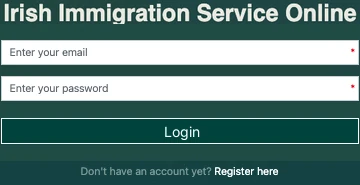
Open Irish Immigration Service Online. Enter your account email and password, then select Login. If you do not have an account, use the official “Register here” link.
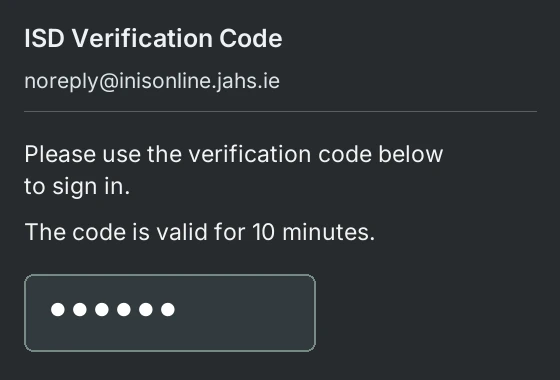
The email verification code
ISD may email you a six-digit code after you sign in. Open that email and enter the code on the website. In the message we checked, the code was valid for 10 minutes.
02 · Find the TPTS form
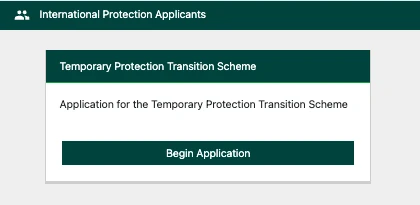
The location is easy to miss. Expand “International Protection Applicants”, find “Temporary Protection Transition Scheme” and select “Begin Application”.
03 · Save after every page
Select Save regularly and at the end of each page. If you hit a technical problem, ISD says you may need to sign in again and resume from the last saved point.

04 · Individual or family application
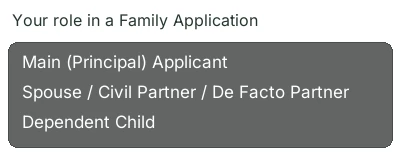
Choose the option that describes how you are applying. “Individual Application” is the individual route. “Family Application” asks you to identify your role in the family.
- Main (Principal) Applicant: the main applicant in the family route.
- Spouse / Civil Partner / De Facto Partner: applying as the Principal Applicant’s partner.
- Dependent Child: applying in the child role described by the Scheme.
05 · Your details, address and residence
Have your passport and other documents beside you. Enter your details as they appear on those documents.
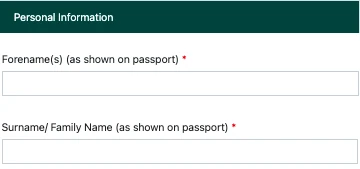
Names, household and relationship status
Write your given names and surname exactly as they appear in your passport. The fields are Forename(s) and Surname/Family Name. Avoid nicknames and explain or support any differences between documents. “How many family members reside with you?” asks how many live with you, not how many are applying for TPTS. Your relationship status is a separate question from your relationship to the main applicant.
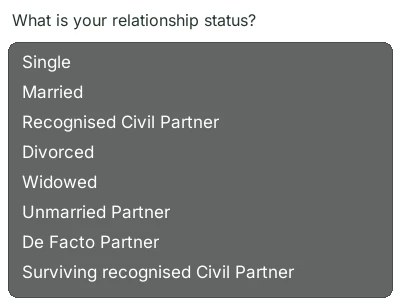
Choose your actual relationship status
The options include Single, Married, Recognised Civil Partner, Divorced, Widowed, Unmarried Partner, De Facto Partner and Surviving recognised Civil Partner. Not being married does not automatically mean choosing De Facto Partner; that family category has evidence requirements.
Nationality, passport and contact details
Give your actual nationality and any other nationality separately. Do not infer nationality just from birthplace or a protection record. Use your own passport number, expiry date, PPS number, phone and email. Follow the country-code instruction if your phone number is not Irish.
Address and accommodation
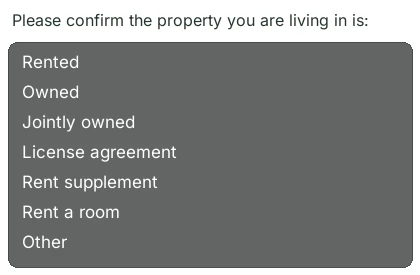
Enter your current address, Eircode and when you began living there. Property options include Rented, Owned, Jointly owned, License agreement, Rent supplement, Rent a room and Other. Select what describes your arrangement. If rented, the form asks for the landlord’s name and contact details.
Accommodation warning in the form
The live form excludes applicants resident in UCTAT accommodation, homeless accommodation, other State emergency accommodation, ARP, rapid build, and accommodation provided by IPAS. If your arrangement is unclear, check the live guidance or ask ISD before assuming eligibility.
Two residence questions, two dates
Time resident in Ireland and time resident here as a Temporary Protection beneficiary are separate questions. They can differ. The form also asks for your entry date and Temporary Protection grant date. Check your documents rather than guessing.
06 · Find your Temporary Protection Number
Find your Temporary Protection letter before filling in this part. The form also asks for a GNIB number/IRP number in a separate field.

GNIB / IRP registration number
This field asks for your registration number. In the documents used for this guide, this was the GNIB-style number, not the separate number identifying the physical card. Card layouts vary. If yours shows several numbers, check which is the registration number before copying it.
Previous immigration history
These questions ask about your previous immigration applications, refusals and permissions, including protection in another country. Read each question in full and answer from your own history.

07 · Work and pay
The Principal Applicant’s route has an Employment section with “Employed” and “Self Employed” options. Follow the route that describes your work.
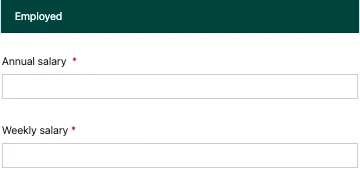
Use your pay before deductions
The form asks for gross salary: your pay before tax and other deductions. Use that amount for the annual and weekly pay fields, rather than the amount paid into your bank account. Check your contract or employer letter. The employed route also asks for your employer, a contact person, email and phone, workplace address and Eircode, start date and contract type. If your earnings vary, check the official guidance rather than choosing your own averaging method.
Check which salary figure the form asks for
The Introduction says “average gross earnings of €29,432 per year”. Supporting Documents says annual salary is “greater than €29,432”. Those wordings differ. If your earnings are at the boundary, ask ISD which condition applies to you.
Employment evidence: minimum two proofs
You need at least two proofs of employment or self-employment for at least six months. Supporting Documents asks for a minimum of two listed documents covering the six months before 30 September 2026.
- At least four payslips covering the previous six months.
- An employment contract showing annual salary OR an employer letter confirming employment details.
- Employment Detail Summary or Statement of Liability from Revenue; bank statements.
- For self-employment: Revenue’s Indicative Calculation used for self-assessment and a full set of trading accounts for the previous 12 months, for the specified trade/farming/rental income. The form lists Trading Profit and Loss Account, Capital Account, Balance Sheet, Adjusted Profit Computation and Form 11.
08 · Add your family members
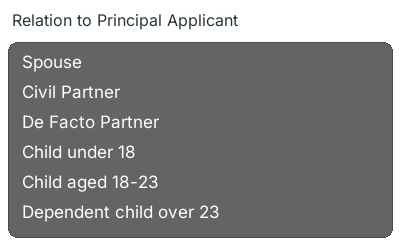
The main applicant lists the applying family members in Family Application. Enter each person’s name, Temporary Protection Number and relationship to the main applicant (Relation to Principal Applicant). Each additional qualifying member still completes a separate application.
Who the Scheme lists
Spouse, recognised civil partner or de facto partner; children of the principal or their spouse/partner aged 23 or under; and the specific disability / close-personal-care case for an adult child over 23. Family members must live with the Principal Applicant in Ireland under Temporary Protection and meet the Scheme conditions. Parents are not a listed family category. The dropdown includes Spouse, Civil Partner, De Facto Partner, Child under 18, Child aged 18-23 and Dependent child over 23.
De Facto Partner: evidence of a shared life
This is a partner relationship without marriage/civil partnership. The live guidance requires evidence of living together for the year immediately before the Scheme launched, a genuine continuing relationship, and mutual commitment akin to marriage/civil partnership in practice.
Examples include a shared tenancy/address, utility bills or statements, shared assets/accounts/insurance, travel and children’s birth certificates. They are examples, not a demand for every item. Where either partner was previously married/civil partnered, provide the relevant divorce, dissolution, annulment, legal-separation or death evidence as appropriate.
Children aged 23 or under
The form asks for a birth certificate naming at least one relevant adult in the family application as biological parent. For adoption, it specifies an official adoption certificate and recognition under Irish law with transfer of parental responsibility. Follow those conditions if applicable.
Custody documents for children under 18
Where a custody arrangement exists: sole custody requires legal documentation attesting sole custody. Shared/joint custody requires a permission letter from the other parent/guardian(s). Use the requirement matching your actual arrangement.
Adult child over 23
The form says adult children over 23 generally apply in their own right. Its special family route concerns disability making independent living impossible and requiring close personal care by the Principal Applicant or spouse/partner. Medical evidence and the specified birth/adoption evidence are required. This is not a general route for all adult children.
09 · Answer questions about your history
In Personal History, you will be asked about charges and convictions, prison-release conditions, deportation, removal orders and refusals of entry or permission to remain. There are also questions about terrorism, war crimes, crimes against humanity, genocide, military or paramilitary service and weapons training. Read each question carefully and answer only about yourself.
10 · Upload your documents
Use clear copies of the original documents. Match each file to the category below. What you need depends on your role and circumstances; ISD may ask for more information or originals.
Proof of identity
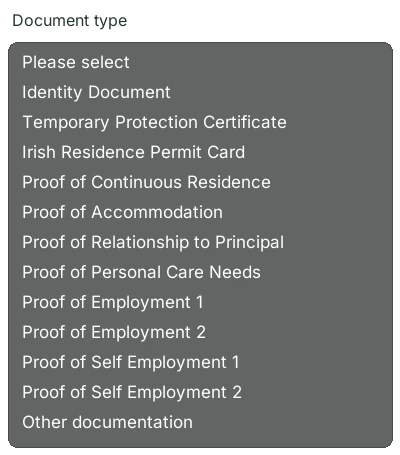
Identity Document. Accepted examples include passport (valid or expired), travel document (valid or expired), valid driving licence, Irish Public Services Card with photograph, national ID card, children’s birth certificates and other ID. The form asks for at least one photographic ID for every applicant. Expired documents supporting identity can be accepted for the online application, but successful applicants need a VALID passport to register the new permission.
Temporary Protection or residence permission
Temporary Protection Certificate / Irish Residence Permit Card. Evidence of permission to remain. The form lists Temporary Protection Certificate, TP Replacement Letter and Irish Residence Permit where applicable. Use the documents matching your permission record.
Proof that you live in Ireland
Proof of Continuous Residence. Adults must demonstrate one year of continuous residence in Ireland under Temporary Protection immediately before 30 September 2026. A child under 18 must show residence with the Principal Applicant under Temporary Protection immediately before that date and at application.
- Examples: lease/rent evidence, utility bills, government correspondence and Social Protection statements.
- Bank/building-society/credit-union statements with activity in Ireland; store-card/catalogue statements are not accepted.
- Irish school/college records, a school-principal letter about attendance in the past two years, doctor/hospital letters, Irish child vaccination records, or active home/car insurance correspondence.
- A document covering several family members may be accepted. Other verifiable evidence may be considered. Friends’/neighbours’ letters cannot be the ONLY proof.
Proof of your accommodation
Proof of Accommodation. The heading applies to these adult roles. It asks for at least one listed proof per adult applicant/family member: letting-agent letter, rental/tenancy/licence agreement, RTB registration or proof of house ownership.
Family relationship and personal care
Proof of Relationship to Principal / Proof of Personal Care Needs. Marriage or recognised civil-partnership evidence, de facto evidence, or the child birth/adoption and custody documents explained above. The personal-care category is for the specific dependent-child-over-23 route with medical evidence.
Proof of work or self-employment
Proof of Employment 1 / 2. The Principal Applicant’s employment evidence belongs here. Use the minimum-two-proofs instructions in the Employment section. Select the category matching the document you are attaching.
Other relevant documents
Other documentation. Optional additional material relevant to your application. It does not replace the required evidence.
Arrange certified translations
Supporting Documents says a document not in Irish or English must have a full certified translation into one of those languages. Introduction specifies a qualified professional translator, written confirmation of a true and accurate translation, the translation date, and translator/company representative’s full name and contact details. It also points to EU multilingual standard forms for certain public documents; check that specific official exception if relevant. An AI or self-made translation is not a certified translation.
One file per upload box
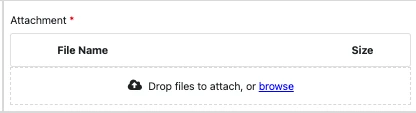
Combine all pages of a document into one file before upload. This means one file per upload box, not one file for the whole application. Select Document type, add a Document description, then browse or drop the file. Use “Add Another” for another upload row. Check every page is readable after compression.
11 · Check and submit
Check passport spellings, full reference numbers, dates, applying family members, documents and translations. Save your progress. Read the declarations, then select “Submit Form” when ready.
Confirm it moved out of Draft
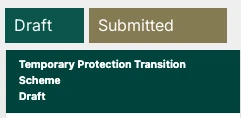
Open My Forms and check the Submitted tab. A form still marked Draft has not been submitted. Other tabs include Additional Information Required and Application Submission Complete.
The dashboard advises checking My Forms if no confirmation email arrives after two days. That is a submission check, not a promise that ISD will decide within two days. Submitted does not mean approved.
When Temporary Protection ceases
The Introduction acknowledgement says that, if the application is successful, Temporary Protection permission ceases when you REGISTER the new TPTS permission. Pressing Submit is not described as that point.
If something changes after application
The Introduction says to inform the TPTS Unit immediately and provide relevant evidence for changes to personal details, contact details or circumstances, such as a family member leaving Ireland. Use current official contact instructions.
Easy mistakes to avoid
- Looking under the wrong dashboard heading, or confusing TPTS with asylum.
- Using Person ID, AR60, passport or IRP numbers as the TP Number; leaving out the /.
- Copying screenshot selections, including relationship or Personal History answers.
- Forgetting Save, or leaving a Draft longer than the 14-day warning.
- Assuming the Principal Applicant’s family list replaces separate applications.
- Using net salary where gross pay is requested.
- Uploading separate pages to one box, files above 1 MB, or documents without required translations.
- Treating Submitted as approval, or assuming Temporary Protection ends on submission.
Short answers
What is TPTS in Ireland?
A transition route for eligible Temporary Protection beneficiaries to an alternative immigration permission. Applications opened on 30 September 2026.
In this guide ↑Is TPTS the same as International Protection?
No. International Protection is the asylum process. TPTS is a transition from Temporary Protection.
In this guide ↑Where is the TPTS form?
ISD Online → Dashboard → International Protection Applicants → Temporary Protection Transition Scheme → Begin Application.
In this guide ↑Where is my Temporary Protection Number?
Look for Temporary Permission Number on your Temporary Protection letter. Enter the complete number, including /. The label and letter layout can vary.
In this guide ↑Does each family member need a separate application?
Yes, each additional qualifying family member must complete their own application. The main applicant’s list links them.
In this guide ↑Is Temporary Protection the same as International Protection?
No. Temporary Protection is the EU emergency mechanism used for displacement from Ukraine; International Protection is a separate asylum process.
In this guide ↑Why is TPTS under “International Protection Applicants”?
That is where the current ISD dashboard places its card. The heading does not change the type of application.
In this guide ↑How long is a Draft kept?
The dashboard says a maximum of 14 days. Save after every page and complete the form within that window.
In this guide ↑Can a de facto partner use the family route?
The Scheme lists this category, with specific relationship and one-year-cohabitation evidence. Not every unmarried relationship automatically meets it.
In this guide ↑Is TP Number the same as Person ID?
No. Person ID is a different identifier. Use the Temporary Permission / Temporary Protection number on your letter.
In this guide ↑Is TP Number the same as GNIB / IRP number?
No. GNIB/IRP is a separate registration-number field; a physical card identifier may also be separate.
In this guide ↑Which documents do I need?
Identity, permission and residence evidence; relevant accommodation, Principal Applicant employment, family/care and translation evidence for your route.
In this guide ↑What counts as proof of residence?
The form gives examples such as rent/utility evidence, official letters, Irish bank activity and education records. Adults and children have different requirements.
In this guide ↑What counts as proof of accommodation?
The listed examples are a letting-agent letter, rental/tenancy/licence agreement, RTB registration or proof of ownership, for the specified adult roles.
In this guide ↑Do Ukrainian documents need translation?
If not in Irish or English, follow the full certified-translation requirement and specified professional-translator details. Check any applicable EU standard-form exception.
In this guide ↑What files can I upload?
PDF or JPG/JPEG, up to 1 MB. One file per box; combine pages first.
In this guide ↑Where do I check submission?
My Forms → Submitted. Check this if no confirmation email arrives after two days; submission is not approval.
In this guide ↑Does Temporary Protection end when I press Submit?
The form says it ceases on registration of the new permission after a successful application, rather than simply on submission.
In this guide ↑Is TPTS “Stamp 4”?
The Department’s gov.ie “A New Permission” page describes TPTS as a Stamp 4 permission. This does not mean everyone with Stamp 4 uses this Scheme. Check the live conditions for your route.
In this guide ↑Official sources you can check
- TPTS opening notice · ISD ↗
- TPTS opening notice · Russian ↗
- TPTS opening notice · Ukrainian ↗
- Official application · ISD Online ↗
- Temporary Protection information · ISD ↗
- International Protection explained · IPO ↗
- TPTS permission / Stamp 4 · Department of Justice ↗
Checked against the current application screens · 1 October 2026