TPTS IRELAND · 2026
How to move from Temporary Protection to Stamp 4 in Ireland
A clear step-by-step guide to the TPTS application. Follow the form at your own pace.
Step 1 of 15Get ready
All steps
Step 01
Understand the route to Stamp 4
TPTS means Temporary Protection Transition Scheme. It lets eligible Temporary Protection beneficiaries apply for a new permission on a Stamp 4 basis.
- This guide walks you through the application, one step at a time.
- Read the current scheme conditions on ISD Online before applying.
Transition Scheme
Step 02
Have these ready
Keep your documents beside you and make sure you can open the email used for your ISD account.
- Identity and Temporary Protection documents
- Residence and accommodation evidence
- Work evidence for the Principal Applicant
- Family documents and certified translations, where required
Identity and Temporary Protection documents
Residence and accommodation evidence
Work evidence for the Principal Applicant
Family documents and certified translations, where required
Step 03
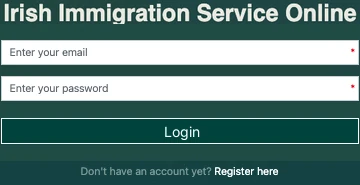
Sign in to ISD Online
Enter the email and password for your Irish Immigration Service Online account, then select Login.
- No account yet? Use “Register here” on the official sign-in page.
- Keep this guide open while you fill in the official form.
Step 04
Check your email for the code
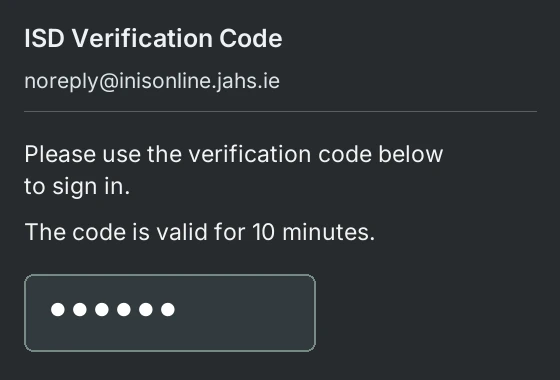
ISD may send you a six-digit sign-in code. Open the email from ISD and enter that code on the website.
- The email we checked says the code is valid for 10 minutes.
- Use the code from your own email. The dots here hide the real code.
Step 05
Find the TPTS application
On the Dashboard, expand “International Protection Applicants”. Find “Temporary Protection Transition Scheme” and select “Begin Application”.
More detail about this step Open ISD Online (new tab)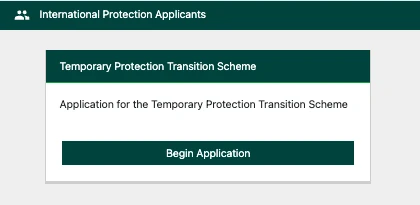
Step 06
Save after each page
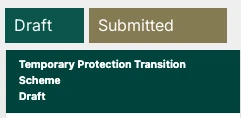
Select Save regularly. If you need to sign in again, return to My Forms and continue from the last saved point.
- Saving keeps a draft. It does not submit the application.
- The dashboard warns that drafts are kept for a maximum of 14 days.
Step 07
Individual or Family Application?
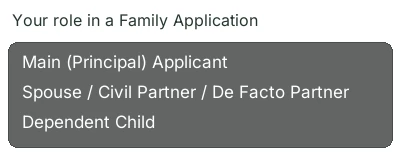
Choose Individual Application for the individual route. For Family Application, select your role in the family.
- Main (Principal) Applicant
- Spouse / Civil Partner / De Facto Partner
- Dependent Child
Step 08
Each family member needs their own application
The Principal Applicant lists the applying family members in the Family Application section. Each additional qualifying family member completes a separate application.
More detail about this stepSeparate application
Separate application
Separate application
Separate application
Step 09
Your details and where you live
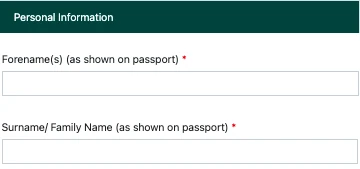
Enter your given names and surname exactly as they appear in your passport. Use your own nationality, contact details and current address.
- Household count asks who lives with you, not who is applying.
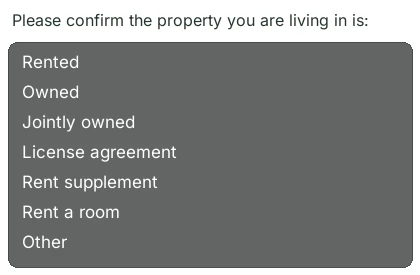
- Choose your actual relationship status and accommodation type.
- Time in Ireland and time under Temporary Protection can differ. Check your arrival and grant dates.
Step 10
Find your Temporary Protection Number
Find your Temporary Protection letter. On the letter used to check the form, this number was labelled Temporary Permission Number.
- The form asks for Temporary Protection Number.
- Enter the whole number, including the /.
Keep the / in the middle. GNIB / IRP is a separate field.
Do not enter your Person ID here


Step 11
Your work and pay before tax
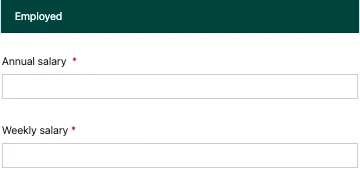
The Principal Applicant chooses Employed or Self Employed. Gross salary means pay before tax and other deductions.
- Use your contract or employer letter to check the salary.
- Prepare at least two proofs covering the required six months.
Step 12
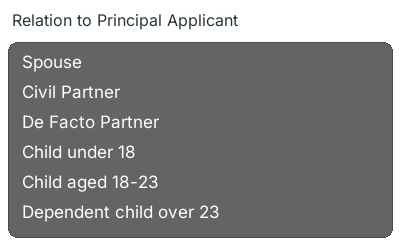
Family relationships and evidence
Choose the actual relation to the Principal Applicant. The scheme lists spouse, recognised civil partner, de facto partner and specific child categories.
- De Facto Partner requires evidence of a shared life, including living together for the year immediately before the scheme launched.
- Children may need birth or adoption documents. Under-18 custody arrangements can require legal evidence or the other parent’s permission.
- The over-23 family category has specific disability and close-care conditions.
Step 13
Answer Personal History about yourself
Read every question carefully. This section covers criminal and immigration history, refusals, removal, and questions about military service and serious offences.
More detail about this stepYour history. Your answers.
1Read each question in full
2Answer about yourself
3Check anything you do not understand
Step 14
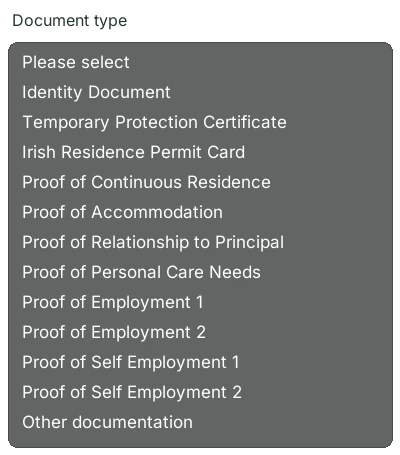
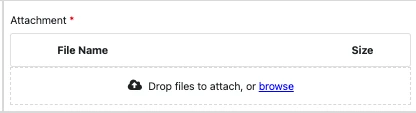
Prepare readable files and upload them
Choose the correct Document type and add a description. The full guide explains each evidence category.
- One upload box takes one file. Combine all pages of a document.
- The checked form accepts PDF / JPG / JPEG, with a 1 MB limit.
- Use Add Another for another upload row.
- Documents outside English or Irish need the required full certified translation.
Step 15
Check, submit and confirm
Check names, full numbers, dates, family members, documents and translations. Read the declarations, then select Submit Form when ready.
- Check your email and My Forms → Submitted.
- If no confirmation email arrives after two days, the dashboard advises checking My Forms. This is not a decision timeline.
You have reached the end of the guide
You complete and submit your application on ISD Online. You can revisit any step here, read the full instructions or ask NewArrival about a field or document.
Read the full guideAn independent NewArrival guide based on application screenshots and official Irish information checked on 1 October 2026. NewArrival is not part of the Department of Justice or ISD. Forms and rules can change; the live official application remains authoritative.
Short answers
What is TPTS in Ireland?
A transition route for eligible Temporary Protection beneficiaries to an alternative immigration permission. Applications opened on 30 September 2026.
More detail about this step ↑Is TPTS the same as International Protection?
No. International Protection is the asylum process. TPTS is a transition from Temporary Protection.
More detail about this step ↑Where is the TPTS form?
ISD Online → Dashboard → International Protection Applicants → Temporary Protection Transition Scheme → Begin Application.
More detail about this step ↑Where is my Temporary Protection Number?
Look for Temporary Permission Number on your Temporary Protection letter. Enter the complete number, including /. The label and letter layout can vary.
More detail about this step ↑Does each family member need a separate application?
Yes, each additional qualifying family member must complete their own application. The main applicant’s list links them.
More detail about this step ↑Is Temporary Protection the same as International Protection?
No. Temporary Protection is the EU emergency mechanism used for displacement from Ukraine; International Protection is a separate asylum process.
More detail about this step ↑Why is TPTS under “International Protection Applicants”?
That is where the current ISD dashboard places its card. The heading does not change the type of application.
More detail about this step ↑How long is a Draft kept?
The dashboard says a maximum of 14 days. Save after every page and complete the form within that window.
More detail about this step ↑Can a de facto partner use the family route?
The Scheme lists this category, with specific relationship and one-year-cohabitation evidence. Not every unmarried relationship automatically meets it.
More detail about this step ↑Is TP Number the same as Person ID?
No. Person ID is a different identifier. Use the Temporary Permission / Temporary Protection number on your letter.
More detail about this step ↑Is TP Number the same as GNIB / IRP number?
No. GNIB/IRP is a separate registration-number field; a physical card identifier may also be separate.
More detail about this step ↑Which documents do I need?
Identity, permission and residence evidence; relevant accommodation, Principal Applicant employment, family/care and translation evidence for your route.
More detail about this step ↑What counts as proof of residence?
The form gives examples such as rent/utility evidence, official letters, Irish bank activity and education records. Adults and children have different requirements.
More detail about this step ↑What counts as proof of accommodation?
The listed examples are a letting-agent letter, rental/tenancy/licence agreement, RTB registration or proof of ownership, for the specified adult roles.
More detail about this step ↑Do Ukrainian documents need translation?
If not in Irish or English, follow the full certified-translation requirement and specified professional-translator details. Check any applicable EU standard-form exception.
More detail about this step ↑What files can I upload?
PDF or JPG/JPEG, up to 1 MB. One file per box; combine pages first.
More detail about this step ↑Where do I check submission?
My Forms → Submitted. Check this if no confirmation email arrives after two days; submission is not approval.
More detail about this step ↑Does Temporary Protection end when I press Submit?
The form says it ceases on registration of the new permission after a successful application, rather than simply on submission.
More detail about this step ↑Is TPTS “Stamp 4”?
The Department’s gov.ie “A New Permission” page describes TPTS as a Stamp 4 permission. This does not mean everyone with Stamp 4 uses this Scheme. Check the live conditions for your route.
More detail about this step ↑